
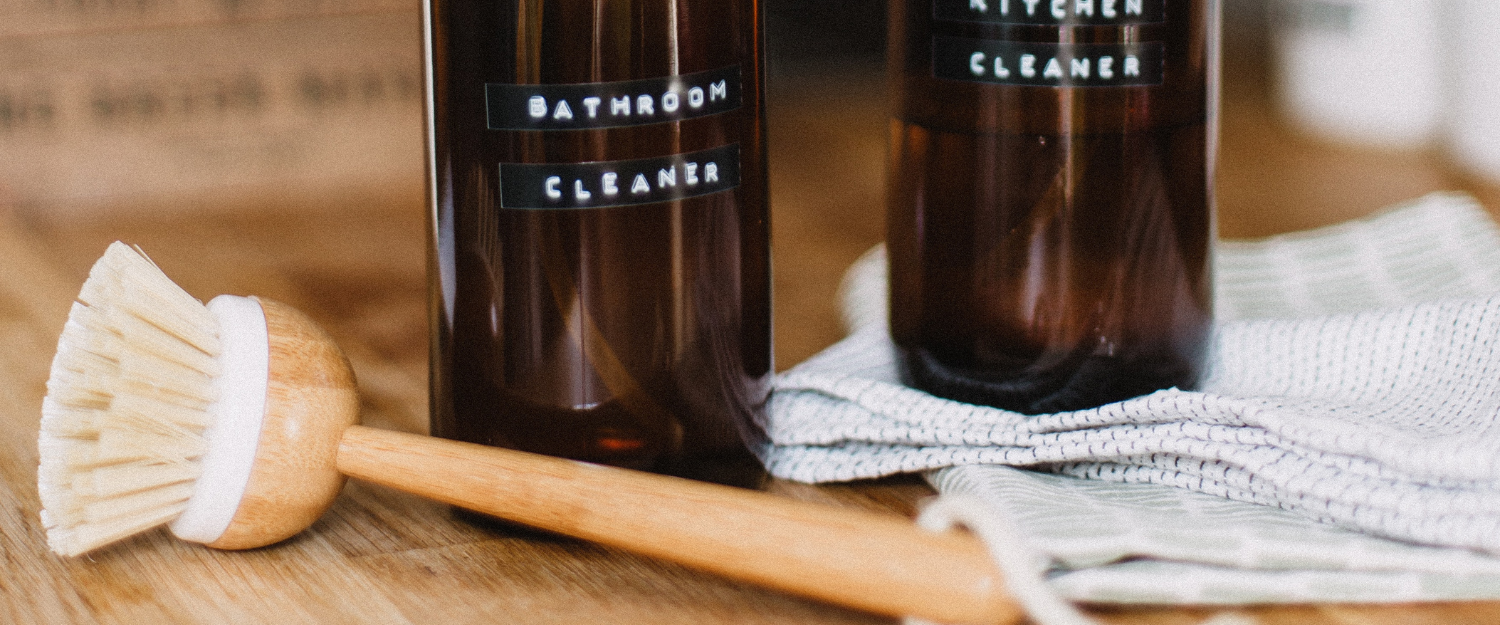
Household Products 101: What to Avoid and What Are the Natural Alternatives?
Our quest for clean homes shouldn't compromise our health or that of our planet. Unfortunately, many conventional household products conceal potentially harmful ingredients, releasing toxins into our living spaces. In this article, we'll explore ingredients to avoid in household products, while also introducing you to natural, eco-friendly alternatives that can revolutionize your cleaning routine.
Get ready to discover how to make the transition to a cleaner, healthier, and greener home!
Ingredients to avoid in household products:
-
Ammonia: Found in some multi-purpose cleaners, it can irritate the eyes, throat and lungs.
-
Chlorine: Found in bathroom cleaners and bleaching products, chlorine emits potentially toxic fumes.
-
Phosphates: Often used in dishwasher and laundry detergents, they can contaminate water sources and contribute to harmful algae blooms.
-
Parabens: Used as preservatives in some cleansers, parabens are possible endocrine disruptors.
-
Petrochemicals: Some cleaners contain petroleum derivatives, which can release volatile organic compounds (VOCs) into the air.
-
Phthalates: Found in artificial fragrances, they may be linked to reproductive and hormonal health problems.
Our natural alternatives:
-
White vinegar : Excellent antibacterial and antifungal cleaner. It is perfect as an all-purpose cleaner or for cleaning windows and mirrors.
-
Baking Soda : Helps eliminate odors and gently clean.
-
Sodium percarbonate : Excellent bleaching agent and stain remover.
-
Black soap : Very versatile, it can be used for cleaning floors, surfaces, as a stain remover and as an ingredient in several household product recipes!
- Citric acid : It is effective in removing limescale deposits in bathrooms and kitchens. It also has antibacterial properties, making it an ideal choice for deep cleaning.
Looking for quick and easy recipes to use these alternatives? Here's a blog post or follow us on Instagram , we share plenty!
Our tips for avoiding toxic household products:
-
Read labels: Avoid products containing potentially harmful ingredients
-
Choose certified eco-friendly products: Look for certifications such as the Ecolabel or USDA Organic.
-
Make your own products: Using ingredients like vinegar, baking soda, and essential oils, you can create effective homemade cleaners that are actually cheaper!
-
Buy green products: Choose brands that promote environmentally friendly products, like those found on Simplitude: See all household products
The quest for a healthy home begins with knowledge. By shedding light on the dark corners of your cleaning products, you gain the power to transform your home. Embrace natural alternatives and a clean that cares for your health and our planet. This journey toward conscious and sustainable cleaning promises to free your space of hidden toxins. Ready for the challenge? Welcome to a reimagined, healthier home.


Leave a comment
This site is protected by hCaptcha and the hCaptcha Privacy Policy and Terms of Service apply.